The Obsolescence of the Human Router
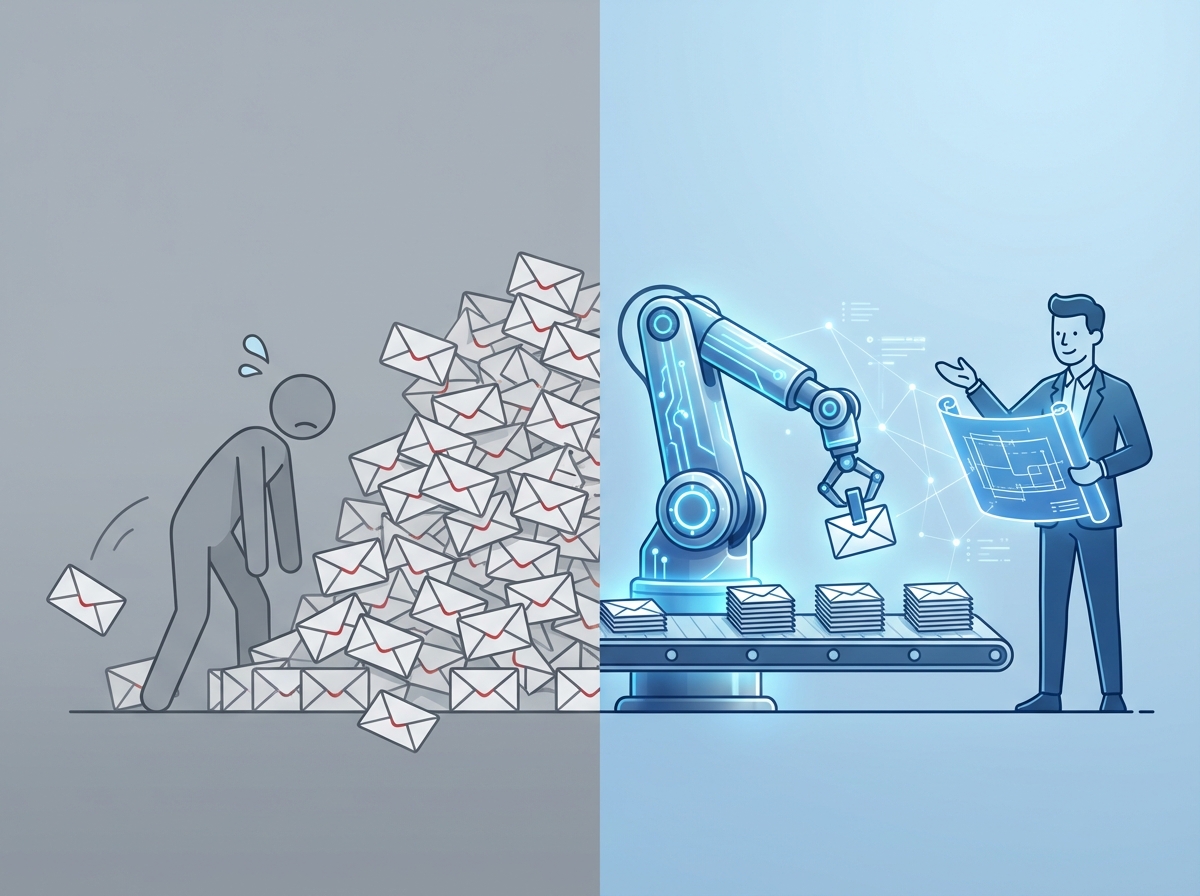
For too long, the traditional IT service desk has treated Level 1 support agents as biological APIs—a layer of human middleware designed solely to intake, categorize, and route tickets. This "triage nurse" approach creates an immediate paradox: the people capable of complex problem-solving are relegated to data entry, while the end-user waits in a queue for a human to perform a task a machine could execute instantly.
The inefficiency extends beyond mere wait times; it is deeply rooted in the cognitive cost of context switching. In a typical hour, a support agent might pivot from a VPN connectivity issue to a software license request, and then to a printer malfunction. Each jump requires a mental reset, dragging down productivity and increasing the likelihood of error. When we ask humans to act as routers, we aren't just wasting time; we are actively degrading the quality of service through fragmented focus.
Furthermore, the psychological toll of this rote repetition cannot be overstated. High turnover rates in service desks are often symptoms of "boreout"—the exhaustion caused by chronic under-stimulation. When bright, technical minds spend their days copy-pasting status updates or walking users through the same password reset script for the thousandth time, job satisfaction plummets. This creates a revolving door of talent that costs organizations significantly in recruitment and training.
Ultimately, the "human router" model is a misallocation of our most valuable resource: empathy. Human connection is critical when a user is frustrated by a complex outage or confused by a new workflow. However, empathy is entirely wasted on a password reset or a status check. These are transactional interactions that require speed, not compassion. By automating the routing and resolution of these mundane tasks, we free human agents to do what they do best: solve unique problems and support people, not tickets.
From Deflection to Resolution: The AI Advantage
For decades, the "holy grail" of IT support metrics was ticket deflection. The strategy was simple but often frustrating for users: throw up enough barriers—cumbersome knowledge bases, complex IVR menus, or rigid chatbots—that the user eventually gives up or figures it out on their own. While this reduced queue numbers, it rarely improved the employee experience. True AI-driven ITSM flips this script completely.
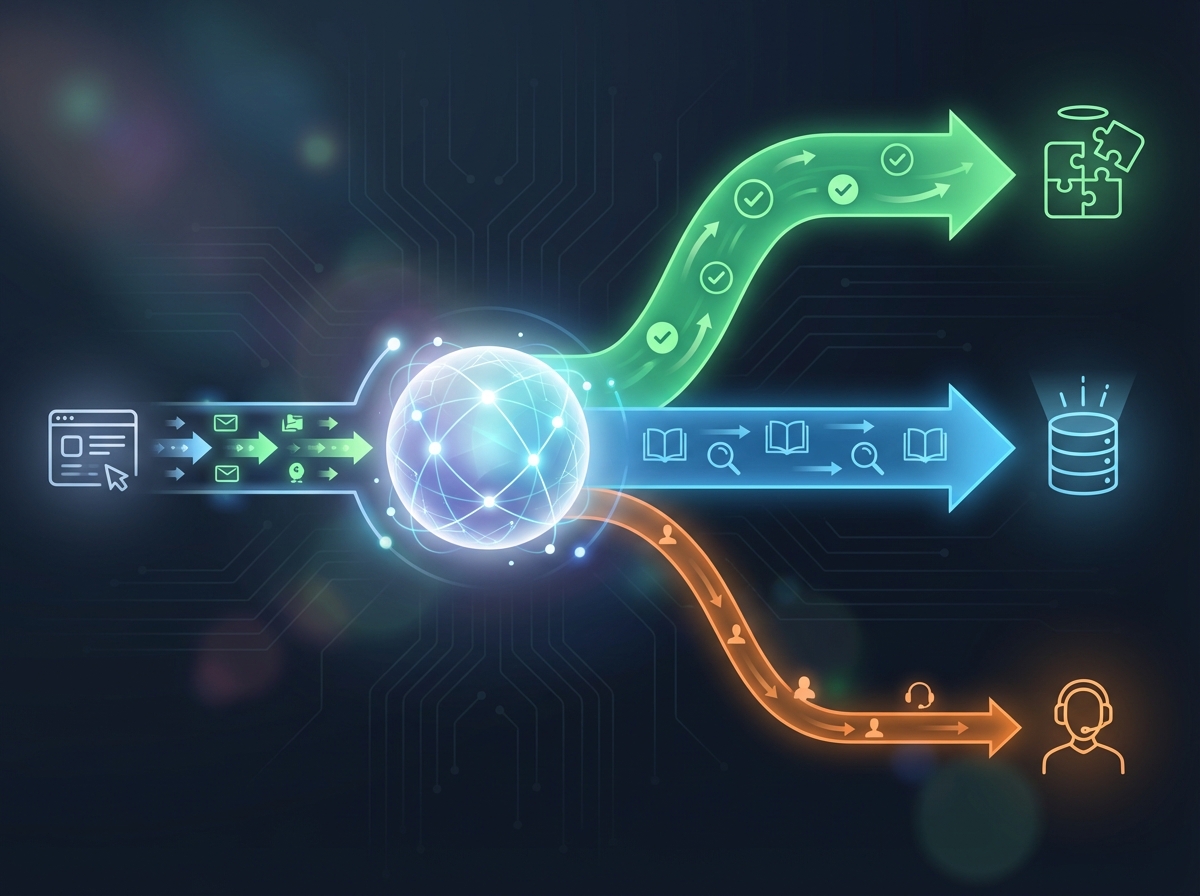
We are moving away from deflection strategies designed to hide the help desk and toward autonomous resolution strategies designed to bypass it entirely. Instead of simply routing a ticket to the correct human queue, modern AI aims to close the loop instantly. This shift is powered by three distinct capabilities that allow machines to act as effective Tier-1 agents:
- Generative AI Agents: Unlike legacy chatbots that merely categorize tickets or paste URL links, GenAI agents understand semantic context. They can interpret a vague request like "my internet is slow," diagnose the endpoint in real-time, and guide the user through specific troubleshooting steps or execute a reset command directly.
- Self-Healing Systems: Through advanced automation and monitoring, AI can detect a hung process, a crashing service, or a disk reaching capacity. It triggers scripts to restart services or clear caches automatically, resolving the issue before the user even realizes there was a problem to report.
- Predictive Maintenance: AI analyzes historical hardware performance data to predict failures. Instead of a user eventually submitting a ticket for a dying laptop battery or a failing drive, the system proactively initiates a replacement request and notifies the user to schedule a swap.
By focusing on resolution rather than containment, IT leaders aren't just saving hours for the service desk; they are restoring lost productivity to the entire workforce.
The Transition Roadmap: Implementing the Shift
Eliminating the traditional Tier-1 support layer is not a flip-the-switch moment; it requires a calculated, data-driven strategy. IT leaders must move beyond theoretical AI adoption and execute a tactical roadmap that prioritizes high-impact areas first. To successfully navigate this transition, focus on three actionable steps.
- Audit your top 10 ticket types for automation potential. Do not attempt to automate everything at once. Analyze your service desk data to identify the ten highest-volume request categories. If a ticket type is repetitive, well-documented, and requires minimal judgment, it is a prime candidate for immediate AI intervention.
- Implement a 'Zero-Touch' goal for specific categories. Shift your objective from "faster resolution" to "no human involvement." Select specific workflows—such as password resets, software provisioning, or VPN troubleshooting—and mandate that AI agents handle these end-to-end. This creates a clear boundary where human intervention is treated as an exception rather than the rule.
- Restructure team KPIs. You get what you measure. If you continue to track Mean Time to Resolution (MTTR), your team will prioritize speed over stability. Shift the incentive structure by adopting metrics like Prevention Rate and AI Accuracy. This encourages your engineers to build better self-healing systems rather than simply closing tickets faster.
By following this roadmap, you transform your service desk from a reactive support center into a proactive reliability engine, freeing your human talent to tackle complex, high-value infrastructure challenges.
Redefining the Human Role: The Rise of the Support Architect
There is a pervasive fear that AI automation signals the extinction of the support team. In reality, the technology is merely stripping away the drudgery. As AI absorbs the massive volume of repetitive Tier-1 tickets—password resets, status checks, and FAQs—human agents are free to step into a more strategic, high-value function: the Support Architect.
This evolution changes the primary KPI from "tickets closed" to "systemic improvement." Instead of acting as a human router for basic queries, modern support engineers are pivoting to three critical areas of responsibility:
- Training the AI (Knowledge Management): An AI model is only as good as the data it feeds on. Support Architects become the curators of institutional knowledge, creating and updating the documentation that allows the AI to resolve issues autonomously. They don’t just answer a question once; they codify the answer so the AI can answer it forever.
- Mastering the Edge Cases: When an issue is too complex or novel for the AI, it requires deep technical empathy and critical thinking. This moves the workflow away from rigid tiered escalation toward collaborative "swarming," where experts tackle high-stakes anomalies that require human nuance.
- Closing the Loop with Product: Support teams possess a goldmine of user data. By analyzing root causes and recurring friction points, Support Architects provide vital feedback loops to engineering and product teams, helping to fix bugs upstream before they ever become tickets.
This transition represents a massive upskilling opportunity. We are moving away from the burnout-inducing grind of the queue and toward a model where support teams serve as strategic partners, directly influencing product quality and customer retention.