
The High Cost of the Big Bang Rewrite
It is the most seductive trap in software engineering: the desire to burn it all down and start over. When faced with a legacy codebase filled with spaghetti code, patched fixes, and obsolete dependencies, the idea of a "Big Bang" rewrite feels like liberation. Developers envision a clean slate where they can implement modern architecture without the baggage of technical debt. However, while total rewrites are attractive in theory, they are frequently fatal in practice.
The most famous warning against this approach is what Joel Spolsky called "The Netscape Mistake." In the late 90s, Netscape decided to rewrite their browser code from scratch. The result was a strategic disaster. The company stopped shipping new versions for years while the engineering team struggled to rebuild what they already had. By the time they released the new version, Microsoft had dominated the market. Netscape learned a hard lesson: you cannot pause your business while you perfect your code.
The fundamental problem with a complete rewrite is the loss of embedded domain knowledge. Legacy code often looks ugly because it is exhaustive. That messy conditional statement or that strange workaround usually exists to handle a specific edge case or a bug reported by a customer five years ago. When you throw away the code, you are not just deleting text; you are deleting the solutions to problems you have forgotten exist. You are trading a known mess for a blank slate where you are doomed to rediscover those same bugs the hard way.
Furthermore, a Big Bang rewrite imposes a debilitating paralysis on the business. To rebuild the system, you often must institute a "feature freeze" on the existing platform. This creates a dangerous gap in value delivery:
- Stagnation: You stop adding value for your current customers, frustrating users who need updates now, not two years from now.
- Competitive Vulnerability: While you are busy rebuilding yesterday's features, your competitors are building tomorrow's innovations.
- The Moving Target: Business requirements do not stop changing just because you are rewriting code. By the time the new system catches up to the old one, the market has likely shifted, leaving the new system instantly outdated.

The Strategic Role of API Wrappers
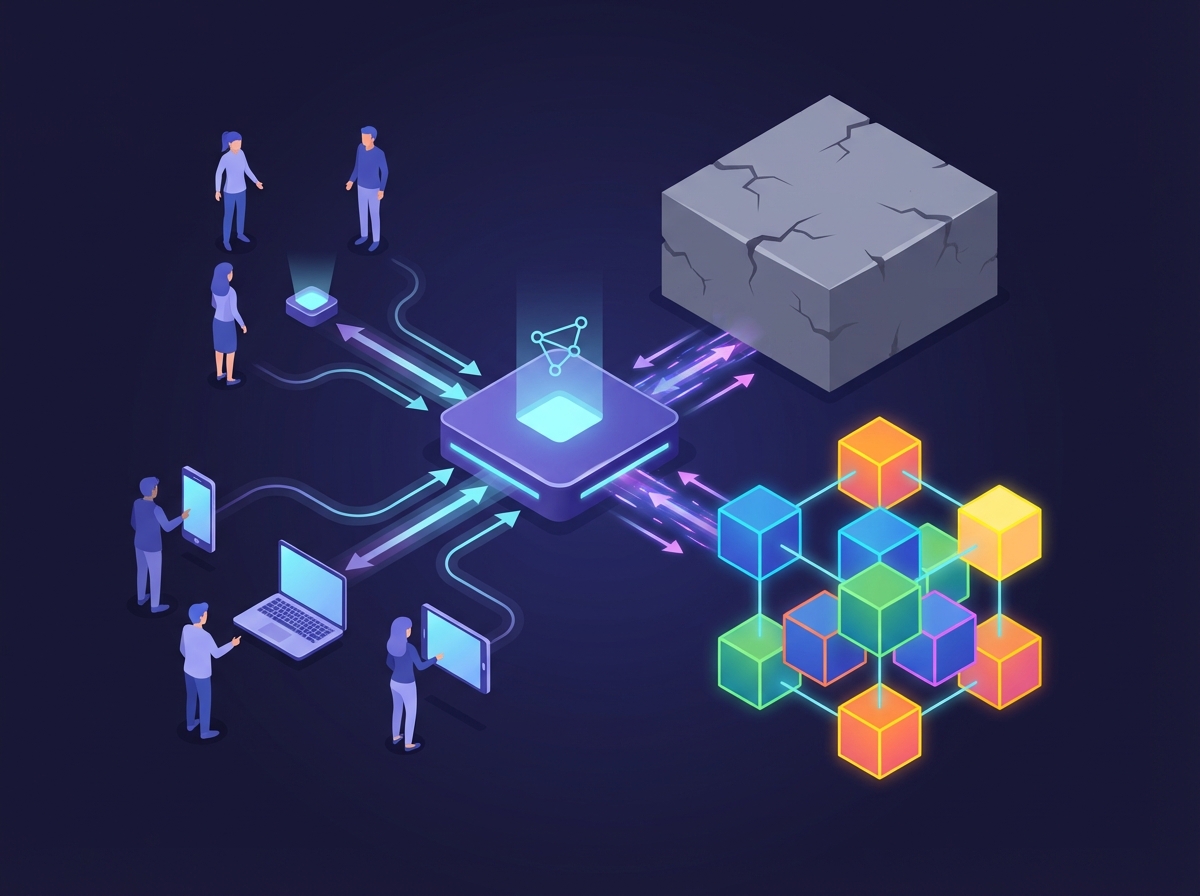
At the heart of the Strangler Fig pattern lies a critical architectural component: the interception layer. You cannot strangle a legacy system if you cannot control the traffic flowing to it. This layer acts as a facade, sitting squarely between your users and your backend services to manage the flow of requests without the client ever knowing which system is fulfilling them.
Technically, this usually takes the form of an API Gateway or a reverse proxy. Its primary job is to act as a traffic cop. When a request comes in, this interceptor determines if the specific functionality has been migrated to a modern microservice or if it must still reside in the monolith. If the feature is modernized, traffic is routed to the new system; if not, it falls back to the legacy backend seamlessly.
However, intelligent routing is only half the battle. To truly decouple your modernization efforts, you must implement an Anti-Corruption Layer (ACL) within this wrapper. The ACL translates clean, modern API requests into the often archaic formats, SOAP envelopes, or direct database calls required by the legacy system. This translation layer is vital for several reasons:
- Schema Independence: The new system can define its own ideal data structures without being polluted by the legacy database design.
- Asynchronous Development: Your frontend team can start building modern user interfaces against the new API contract immediately, even while the backend is technically still just a wrapper around the old code.
- Risk Mitigation: If a new module performs poorly, the wrapper can quickly revert traffic back to the legacy path without requiring a full system rollback.
By treating the API wrapper as a strategic boundary, you gain the freedom to modernize the frontend and backend at different speeds, ensuring that the technical debt of the past never leaks into the architecture of your future.
Ensuring Continuous Availability
One of the primary goals of the Strangler Fig pattern is to maintain a seamless experience for end-users while the architecture shifts beneath their feet. Modernization should never come at the cost of uptime. To mitigate the risks associated with replacing critical legacy components, engineering teams must implement robust safety mechanisms that allow for granular control over traffic routing.
The first line of defense is the implementation of feature flags. These toggles allow developers to deploy new microservices into production without immediately activating them for all users. By wrapping the routing logic in a feature flag, you gain the ability to switch between the old monolith path and the new microservice path instantly. If the new implementation throws an unexpected error or causes latency spikes, you can simply toggle the flag off to revert traffic to the legacy system. This acts as an instant "kill switch," preventing minor bugs from becoming major outages.
However, turning a feature on doesn't have to be an all-or-nothing decision. To verify stability with real-world data, teams should utilize Canary Releases. Instead of routing 100% of the traffic to the new module immediately, the load balancer or API gateway is configured to send only a small fraction—perhaps 5%—to the modernized service.
This approach limits the "blast radius" of potential failures. If the canary group experiences issues, the impact is contained to a negligible number of sessions. Once the new service proves it can handle the load without errors, you can incrementally increase the traffic percentage until the legacy component is fully strangled and ready for decommissioning.

Understanding the Strangler Fig Pattern
Originally coined by Martin Fowler in 2004, the Strangler Fig pattern derives its name from a unique species of plant found in rainforests. To truly grasp the power of this modernization strategy, you first have to visualize the biological process that inspired it.
In nature, a strangler fig seed germinates in the upper branches of a host tree. Unlike most plants that grow from the ground up, the fig grows roots downward, gradually wrapping around the host. Over time, the fig thickens and strengthens, effectively enveloping the host tree. Eventually, the host dies and rots away, leaving behind the fig—now a strong, standalone tree standing in the exact shape of its predecessor.
When applied to software architecture, this metaphor provides a roadmap for risk-averse migration. Instead of rewriting a massive legacy monolith from scratch—a high-risk approach often referred to as a "Big Bang" rewrite—you grow the new system around the edges of the old one.
This incremental process typically works by creating a new interception layer, such as an API gateway or load balancer. As you build modern microservices or components, you configure this layer to route specific traffic to the new implementation while letting the rest fall through to the legacy application. Over time, as more functionality is migrated to the new "vine," the legacy "host" handles less traffic, until it eventually becomes obsolete and can be safely decommissioned.
Executing the Migration: Identify, Isolate, Intercept
Transitioning from a monolithic architecture to microservices is not a singular event but a continuous cycle. To successfully apply the Strangler Fig pattern, you must resist the urge to rewrite complex core logic immediately. Instead, follow a disciplined, four-step workflow designed to minimize downtime and maintain system stability while the residents are still living in the house.
- 1. Identify a low-risk, distinct module: Begin with the "low-hanging fruit"—capabilities that are boundary-distinct and not mission-critical. Good candidates for the first iteration include email notification services, static reporting, or user authentication. Avoiding the core transaction engine initially allows your team to refine their CI/CD pipelines and deployment strategies without risking the primary revenue stream.
- 2. Build the modern microservice equivalent: Develop the new functionality as an independent service using your modern technology stack. This new component should ideally own its own data model rather than sharing the legacy database, ensuring true decoupling. At this stage, the service exists in your environment but sits dormant, waiting to receive traffic.
- 3. Update the API wrapper to route traffic: This is the critical "intercept" phase. Modify your facade—whether it is an API gateway, NGINX proxy, or load balancer—to redirect specific endpoints to the new service. For safety, wrap this routing logic in feature flags. This allows you to perform a canary release, routing only a small percentage of traffic to the new service initially, with the ability to instantly revert to the monolith if errors occur.
- 4. Verify and retire the old code: distinct from simply launching the new feature, you must actively decommission the old one. Once the new microservice reaches feature parity and proves stable under full load, delete the corresponding code from the legacy monolith. This cleanup is vital; failing to remove dead code results in a confused codebase that retains the complexity you were trying to escape.
By strictly adhering to this cycle, you transform a high-risk rewrite into a series of manageable, non-destructive updates. Once the first module is successfully strangled, simply identify the next candidate and repeat the process until the monolith effectively vanishes.